Ceasefire Observatory monthly report-October 2025
November 5, 2025
Safeguarding the Rights of Lebanon Expatriates-Policy Brief
December 17, 2025The Israeli – Lebanese Ceasefire: A year in review
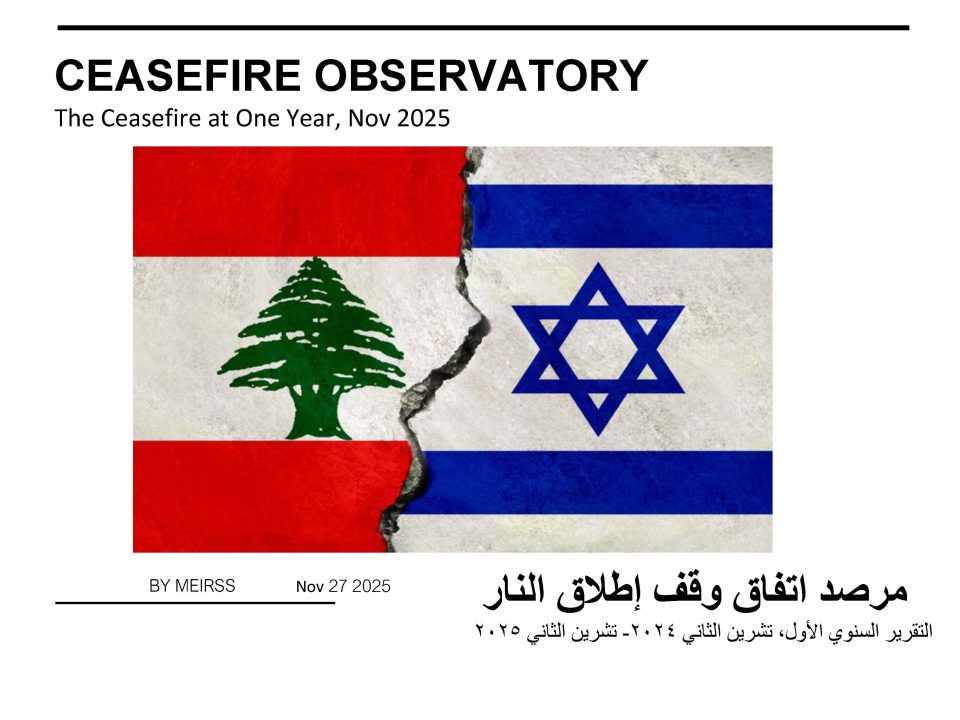
Over the year since the November 27, 2024 ceasefire between Israel and Hezbollah, the agreement prevented an immediate, large-scale resumption of war along the Israel–Lebanon border, but it did not produce durable calm. Instead the year saw repeated tactical violence, air and drone strikes, targeted killings, and occasional ground incursions producing fatalities, injuries, and localised displacement in southern Lebanon. UNIFIL and the Mechanism Committee created formal channels to monitor incidents and coordinate diplomacy; the UN Security Council renewed UNIFIL’s mandate (Resolution 2790, Aug 28, 2025) but set a final term that raised questions about future monitoring capacity. Major diplomatic actors (United States, France, Qatar, Egypt, UN) engaged in active mediation and proposals for staged disarmament tied to Israeli withdrawal, but Hezbollah’s refusal to disarm and Israel’s insistence on implementing the agreement and verifiable reductions in Hezbollah capability, left the core problems unresolved. Key high-risk incidents in 2025 especially those that endangered UNIFIL patrols and LAF personnel sharpened international concern and showed the ceasefire’s fragility.
 Loading...

 Reload document
  Open in new tab