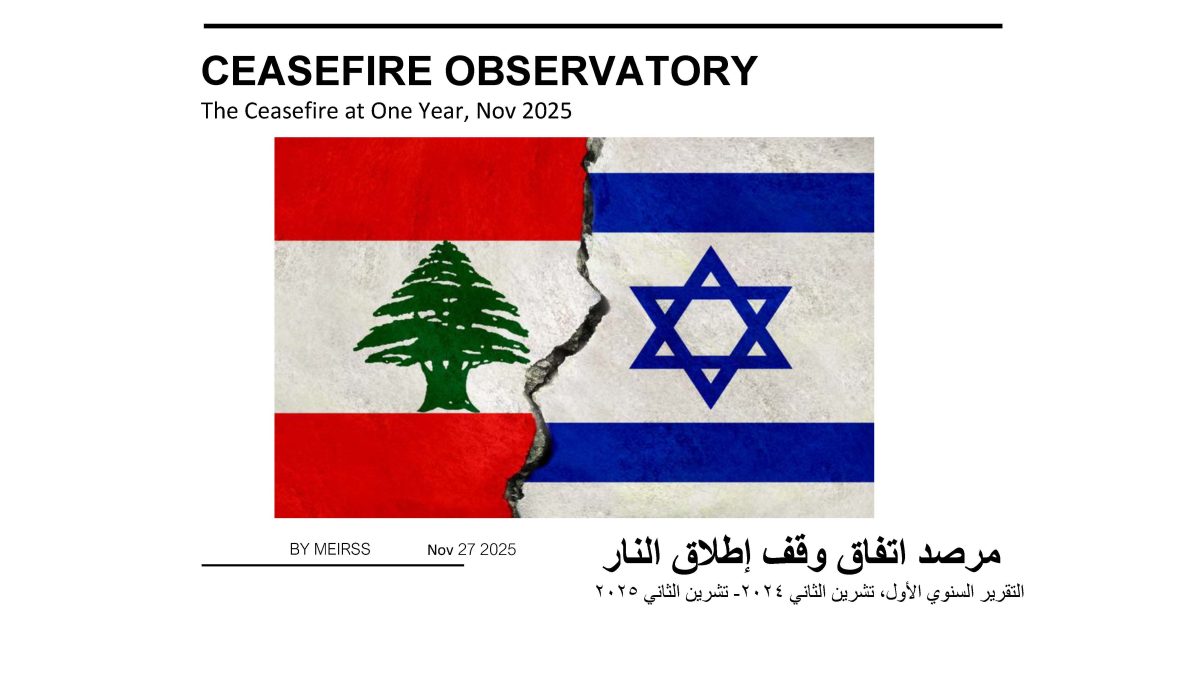
Ceasefire Observatory report-February 2026
March 1, 2026Lebanon Weekly Situation Report
The week of 21 to 27 September 2026 tested whether the Lebanese state’s claim to sole authority can hold beyond the podium. At the UN General Assembly on 25 September, Prime Minister Nawaf Salam declared that the state alone speaks and negotiates for Lebanon, pairing Israeli withdrawal, the release of detainees and reconstruction with exclusive state control of weapons, and pressed for a continued international presence in the south once UNIFIL’s final mandate expires on 31 December 2026. The European Union backed that line materially: on 23 September the Commission adopted €505 million for 2026–2027, and High Representative Kaja Kallas announced a new EU mission to advise and train the Lebanese Army. The same doctrine met direct resistance from the actors it is meant to constrain. On 24 September, President Masoud Pezeshkian answered Salam’s call for non-interference by reaffirming the regional role of the “resistance”, and on 25 September Hezbollah, through MP Hassan Fadlallah, accepted indirect negotiation only on terms that reject the government’s framework. In the south, Israeli strikes ran through the week and widened on 26–27 September after Israel attributed an explosive drone to Hezbollah; at home, a new Banque du Liban circular, labour protests over living costs and an armed clash in Qab Elias marked the domestic strain. Read together, these were not separate files but one sequence: the state asserted its monopoly on decision abroad, secured European backing for it, and saw it contested within forty-eight hours by the external patron and the armed party whose parallel authority it is meant to end.