Lebanon Weekly Situation ReportSept 28-Oct 4
October 5, 2026Lebanon Weekly Situation Report 5-11 Oct
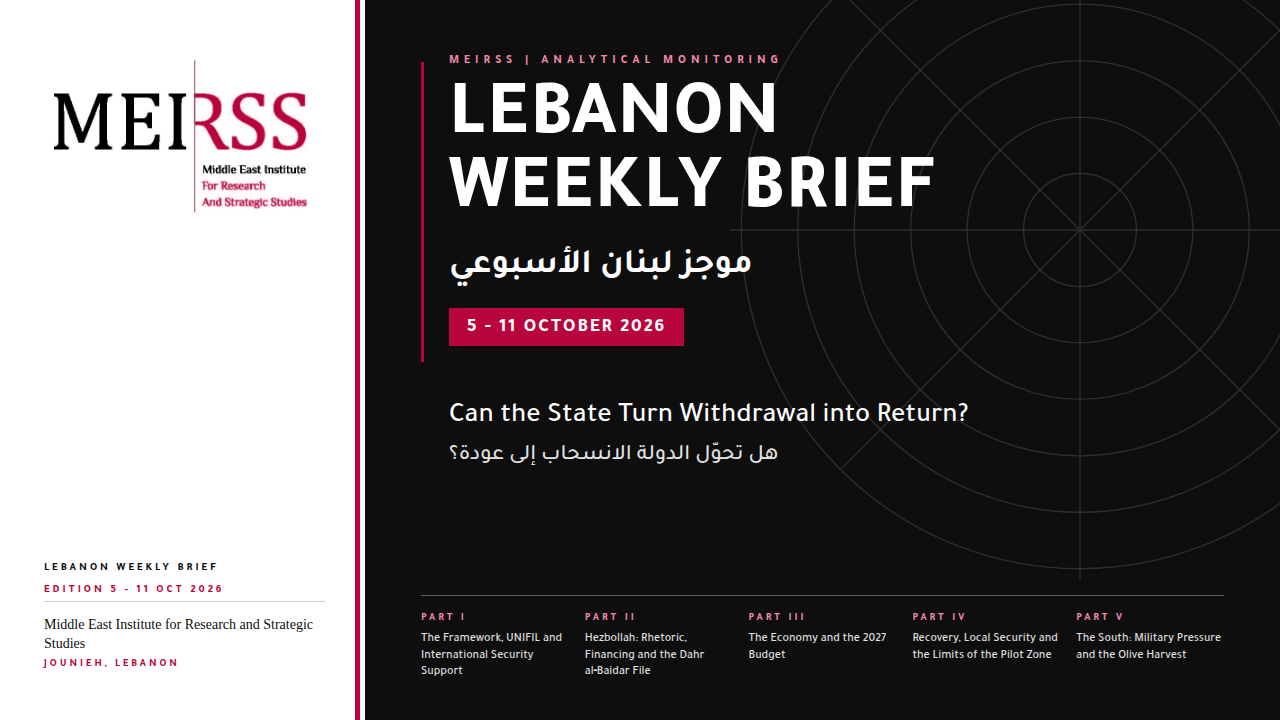
The week of 5 – 11 October 2026 exposed a widening gap between Lebanon’s efforts to restore state authority and the security conditions in which that authority must operate. Israeli attacks, demolitions and incursions continued across the south; a 9 October drone strike near Hawsh al-Sayyed Ali in Hermel wounded six people, while two men died on 11 October in separate incidents during the olive harvest near Yater and Froun. Health Ministry figures released on 10 October placed the cumulative toll since 2 March at 4,386 killed and 12,424 injured, not casualties from this week alone. A report on the first U.S.-backed pilot zone at Zawtar Gharbieh documented around 70 returned families amid devastated housing and absent basic services. EU foreign policy chief Kaja Kallas visited Beirut on 8 October and discussed a planned European training mission, while 86 Lebanese MPs called for an extension or replacement of UNIFIL. Hezbollah leader Naim Qassem offered conditional cooperation over state control of arms, Reuters reported a disputed $200 million Iranian transfer said to have occurred in September, and reports published 10 – 11 October concerning explosives seized at Dahr al-Baidar reignited the weapons debate. Prime Minister Nawaf Salam forecast a 6.4% contraction in 2026 and defended the draft 2027 budget. Separately, U.S. aviation restrictions on Lebanon were officially revoked in a determination published on 5 October; this does not itself restart direct flights.
This week’s central test remains practical implementation: securing territory, restoring services and converting diplomacy into verifiable results.
 Loading...

 Reload document
  Open in new tab